
More Reliable Erections
Understanding what's changed is the first step towards restoring confidence.
If your erections aren't as reliable as they once were, you're not alone.
Whether they're taking longer to develop, don't feel as firm, become difficult to maintain during intimacy or have gradually become less frequent over time, erectile changes are common and can affect confidence, relationships and quality of life.
At CoreGood we don't just focus on erectile dysfunction. We identify the systems having the greatest influence on your erectile function, explain what's changed and develop a personalised rehabilitation pathway focused on where we can make the greatest difference.

What this page covers
- ✓Why erections change
- ✓How healthy erections depend on several body systems working together
- ✓How we identify what's contributing to your erectile function
- ✓What your personalised rehabilitation pathway may include
- ✓What improvement you can realistically expect
- ✓Common questions about erectile dysfunction
Many men wonder whether it’s simply part of getting older, whether it’s all in their head, or whether anything can actually be done.
"Is this just part of getting older?"
"Is it all in my head?"
"Can anything actually be done?"
In many cases, the answers are more encouraging than men expect.
Understanding Erections
An erection is one of the body's most coordinated physiological responses. It isn't controlled by one body part or one hormone. Healthy erections depend on several systems responding together at the right time.
- Healthy blood flow.
- Responsive nerves.
- Healthy erectile tissue.
- Pelvic floor function.
- A well-regulated nervous system.
Healthy blood flow fills the erectile tissue. Responsive nerves coordinate the process. Healthy erectile tissue expands and traps blood to create rigidity, while the pelvic floor muscles provide additional support by helping reduce the blood leaving the penis. Throughout this process, the autonomic nervous system helps regulate the transition from a resting state to sexual arousal and, ultimately, orgasm.
General health also plays an important role. Cardiovascular health, hormones, sleep, breathing, medications, stress and lifestyle all influence how effectively these systems work together. When one or more of these systems isn't functioning as well as it could, erections often become less reliable.
Although two men may experience very similar symptoms, the reasons can be quite different. One man may have reduced blood flow, another may have changes in erectile tissue health, while someone recovering after prostate treatment may be experiencing temporary changes in nerve function. For others, pelvic floor dysfunction, medication, cardiovascular health or nervous system regulation may be having the greatest influence.
Understanding which systems are limiting your erectile function is far more valuable than simply attaching a diagnosis. That's why our approach begins with understanding what's changed before deciding how to improve it.
How We Find the Cause
Every man is different. That's why we don't begin by choosing a treatment. We begin by understanding how your erection system is functioning and identifying the factors having the greatest influence on your erectile function.
Understanding Your Story
Your assessment starts with understanding your story. We'll discuss the changes you've noticed, your general health, medications, lifestyle, previous treatments and the goals that matter most to you.
Personalised Clinical Assessment
From there, we perform a personalised clinical assessment focused on the systems most likely to influence your erectile function. Depending on your situation, this may include assessing pelvic floor function, breathing, movement, cardiovascular health, nervous system regulation and other relevant clinical findings.
Objective, Non-Invasive Assessment
Where appropriate, we also use objective, non-invasive assessment technologies such as real-time ultrasound biofeedback and MAPLe EMG biofeedback to better understand pelvic floor function before recommending rehabilitation. These technologies often allow us to assess muscle coordination, relaxation, endurance and control without the need for an intimate examination.
The goal isn't simply to diagnose erectile dysfunction. It's to understand why your erections have changed.
If an internal examination is likely to provide important additional information, we'll explain why it's being recommended and only proceed with your informed consent.
Building Your Personalised Pathway
Once we've identified the systems having the greatest influence on your erectile function, we can recommend the rehabilitation strategies most likely to help you achieve stronger, more reliable erections.
Your Personalised Rehabilitation Pathway
No two men experience erectile dysfunction in exactly the same way, so no two rehabilitation pathways should be identical. Once we've identified the systems having the greatest influence on your erectile function, we'll recommend the rehabilitation strategies most likely to improve your erections and help you achieve your personal goals.
- Optimising Pelvic Floor Function
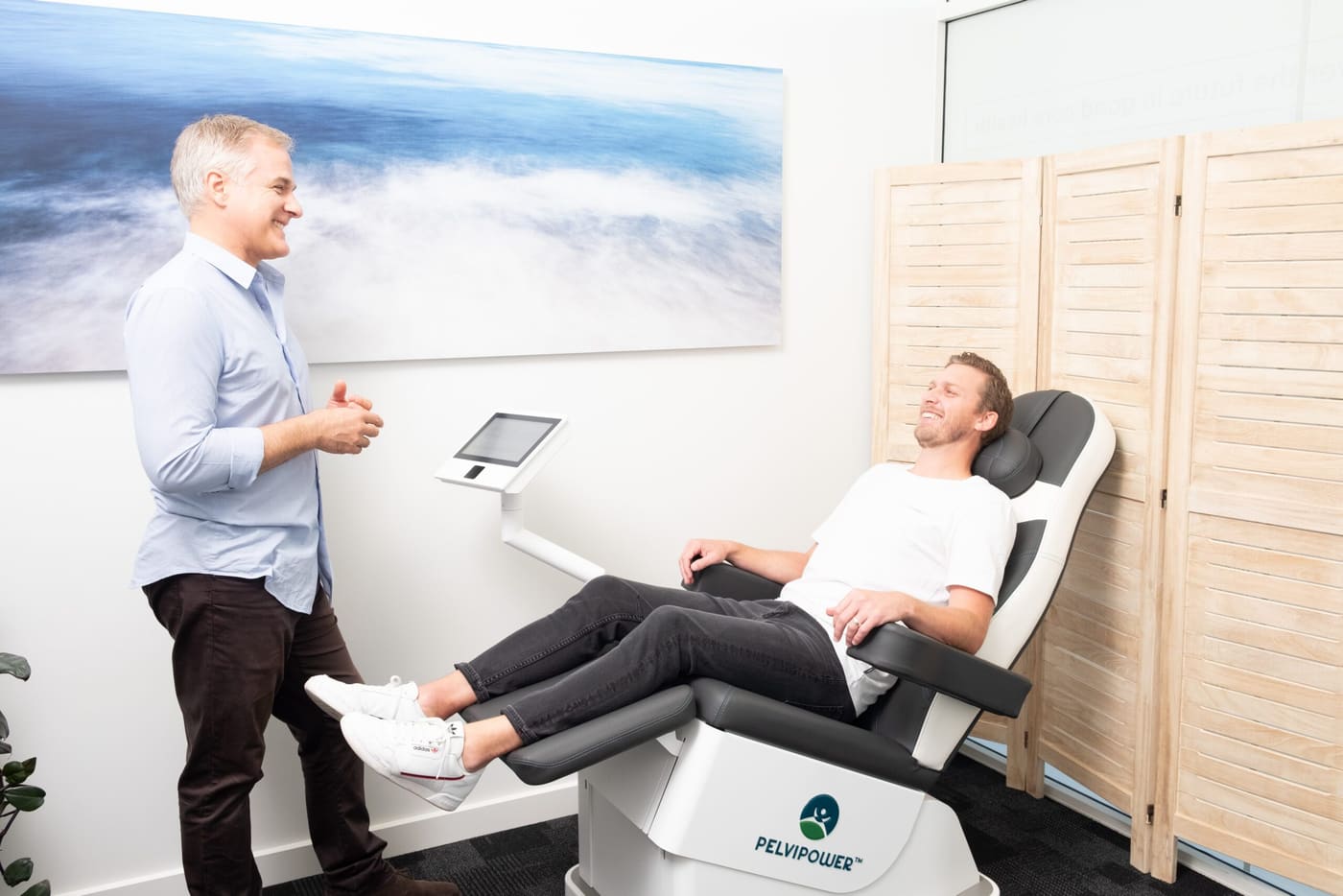
- Your pelvic floor may need to become stronger, more coordinated, better at relaxing or simply better at responding automatically during sexual function. Rehabilitation is guided by your assessment rather than assuming everyone needs strengthening exercises. Depending on your individual needs, your programme may include personalised exercises, pelvic health physiotherapy, real-time ultrasound biofeedback, MAPLe EMG biofeedback and PelviPower pelvic functional magnetic stimulation to improve strength, coordination, endurance, relaxation and neuromuscular control.
- Supporting Erectile Tissue & Vascular Health
- Healthy erectile tissue, healthy blood vessels and responsive nerves provide the foundation for reliable erections. Our goal is to support these systems so your body is better able to produce a natural erectile response. Where clinically appropriate, your rehabilitation may include Focused Shockwave Therapy, Vertica Pro radiofrequency therapy or a structured Vertica Sync home programme to support erectile tissue health, vascular performance and your body's natural erectile response over time.
- Penile Rehabilitation
- Following prostate treatment, periods of reduced erectile activity or other conditions affecting erectile function, maintaining healthy erectile tissue becomes particularly important. Where appropriate, vacuum erection therapy may be recommended to help maintain tissue oxygenation, preserve penile length, support erectile tissue health and complement your overall rehabilitation programme. More about penile rehabilitation.
- Exercise & Lifestyle Optimisation
- Erectile function reflects overall health. Cardiovascular fitness, sleep, nutrition, stress management, breathing patterns, body composition and physical activity all influence how well your erection system performs. Improving these factors not only supports erectile function but also benefits your long-term health and wellbeing.
- Collaborative Medical Care
- Some men benefit from medication, hormone assessment or specialist medical management as part of their overall care. Where appropriate, we'll work alongside your GP, urologist and other healthcare professionals to ensure your rehabilitation complements your broader medical management.
You don't need to know which rehabilitation strategies are right for you before booking. That's our job. Your first appointment isn't about choosing a treatment or technology. It's about understanding what's limiting your erectile function and developing a personalised rehabilitation pathway focused on where we can make the greatest difference.
What Improvement Can I Expect?
Every man's situation is different, so every rehabilitation journey is different. The improvement you can expect depends on what's contributing to your erectile dysfunction, how long it's been present, your general health and your individual goals.
Many men notice improvements in confidence, erectile quality or sexual performance within the first few weeks of rehabilitation, while others require a longer period of recovery. Our focus isn't on following a fixed programme or timeline. It's on helping you achieve the best outcome possible by targeting the factors having the greatest influence on your erectile function.
For some men, rehabilitation results in a return to reliable spontaneous erections. For others, it means meaningful improvements in erection quality, confidence, sexual performance, intimacy and overall quality of life.
Our role is to identify the systems having the greatest impact on your erections, focus rehabilitation where it's most likely to make a difference and support you throughout each stage of your recovery.
Where Would I Be Seen, And What Does It Cost?
Erectile dysfunction is not covered by ACC. ACC covers injury rather than illness, so appointments for ED are self-funded. You do not need a referral from your GP, and you can book directly.
| Clinics | 2 Seaview Road, Paraparaumu Beach (Kāpiti Coast), and OraKinetics, The Pillars, 91 Milson Line, Palmerston North 4410 |
|---|---|
| Initial assessment | $240, 60 minutes |
| Follow-up appointment | $140, 30 minutes |
| Focused shockwave therapy | $200 per session |
| ACC | Not applicable to erectile dysfunction |
| GP referral | Not required |
| Free 15-minute discovery call | 0800 267 346 |
If you'd rather talk before booking anything, ring 0800 267 346 and ask for a free 15-minute discovery call with Nathan. There's no charge and no obligation to book.
Frequently Asked Questions
Is erectile dysfunction just part of getting older?+
No. Although erections often change with age, persistent erectile dysfunction shouldn’t simply be accepted as inevitable.
Healthy erections depend on several body systems working together, including blood flow, nerves, erectile tissue, pelvic floor function, nervous system regulation and general health. Understanding which of these systems has changed is the first step towards identifying what may help.
Can my pelvic floor affect my erections?+
Yes. The pelvic floor contributes to erection quality by helping support blood flow within the penis and assisting rigidity. It also plays an important role in ejaculation, orgasm and helping regulate the timing of climax.
In some men the pelvic floor may be underactive. In others it may be overactive or have difficulty coordinating and relaxing appropriately. Both situations can contribute to changes in erectile function, sexual performance and the quality of orgasm.
Understanding how your pelvic floor is functioning is often an important part of understanding why your erections have changed.
Is it all psychological?+
Usually not. Stress, anxiety and performance pressure can certainly influence erections by affecting your nervous system and the body’s natural sexual response.
However, blood flow, erectile tissue health, pelvic floor function, hormones, medications, sleep, cardiovascular health and general wellbeing can all contribute as well.
For many men, erectile dysfunction is influenced by several factors rather than one single cause.
Will I need an intimate examination?+
Not usually. Where appropriate, we begin with objective, non-invasive assessment.
Technologies such as real-time ultrasound biofeedback and MAPLe EMG biofeedback often allow us to assess pelvic floor movement, coordination and muscle function without the need for an intimate examination.
If an internal examination is likely to provide important additional information, we’ll explain why it’s being recommended and only proceed with your informed consent.
Will I need medication?+
Not necessarily. Medication is an effective option for many men, but it isn’t the only way to improve erectile function.
Most men would prefer their body to respond naturally rather than relying on medication to create a single erection for a particular occasion. Where possible, our goal is to understand what’s limiting your erectile function and identify opportunities to support your body’s natural erectile response over time.
Your assessment helps determine whether pelvic floor rehabilitation, supporting erectile tissue and vascular health, lifestyle optimisation, medical management or a combination of approaches is most appropriate for your situation. Where appropriate, we’ll work alongside your GP or urologist so your rehabilitation complements your overall medical care.
Can erectile function improve after prostate surgery?+
Yes, although recovery varies between individuals. Many men experience changes in erectile function following prostate treatment.
A structured rehabilitation programme can help support recovery by maintaining erectile tissue health, optimising pelvic floor function and protecting the systems that influence long-term erectile function while the body continues to heal. Earlier rehabilitation is often associated with better preservation of erectile tissue health and may improve long-term recovery.
Should I buy a vacuum erection device or other treatment before seeing you?+
Usually not. The most appropriate rehabilitation strategy depends on what’s limiting your erectile function.
Rather than investing in treatment first, we generally recommend understanding how your erection system is functioning. Your assessment helps determine which rehabilitation strategies are most likely to benefit you and how different approaches may work together within your personalised rehabilitation pathway.
How many appointments will I need?+
There isn’t one answer that suits everyone. Some men need assessment, education and a home programme. Others benefit from a structured rehabilitation programme over several weeks or months.
Your recommendations will always be guided by your assessment findings, your goals and the progress you make during rehabilitation.
Does ACC cover erectile dysfunction treatment?+
No. ACC covers injury rather than illness, and erectile dysfunction is treated as a health condition rather than an injury. Appointments are self-funded. Our fees are published in full on the Fees and ACC page.
Do I need a GP referral?+
No. In New Zealand you can book a physiotherapy appointment directly. If you already have a referral from your GP or urologist, bring it, because it saves time at the first appointment.
Written and clinically reviewed by Nathan Scott, BPhty (Otago)
Physiotherapist since 1994 · Last reviewed August 2026
Ready to Take the First Step?
You don't need to know exactly why your erections have changed before asking for help. That's our job. Your first appointment is about understanding what's changed, identifying the systems having the greatest influence on your erectile function and developing a personalised rehabilitation pathway focused on where we can make the greatest difference.
Where appropriate, you'll also begin rehabilitation during your first appointment, so you leave with a clearer understanding of your situation, practical strategies to begin immediately and confidence that you're moving in the right direction.